Voter turnout continues to fall: My piece in Centretown News

View the original story published on the Centretown News website here.

Friday November 14.

Somerset Ward’s voter turnout rate continued its decline in the October election, a problem forcing newly elected Catherine McKenney to confront the ward’s growing transient population.

The wide-open election race featured 11 candidates, with mainstay Diane Holmes retiring after years in municipal politics.

Average voter turnout this year was 39.82 per cent, putting Centretown just below the city average. Voter turnout across Ottawa has been in rapid decline since 2006, with rates plunging from 54 per cent to 40 and dropping.

Somerset Ward fell from 50 to 43 per cent from 2006 to 2010 and now to under 40 per cent in 2014.

Somerset was one of only two of the city’s 23 wards with 11 candidates, the highest number in this year’s election.

The diversity of urban Centretown are one explanation for declining voter turnout.

Carleton University political sciencist Conrad Winn suggests voter turnout is directly related to how “consequential” an election seems. When individuals feel that all the options on the ballot offer them the same thing, they are not as likely to vote than if candidates vary in platforms, he says.

“There aren’t a lot of radical things that politicians at any level of government can do,” says Winn. “When you look at where turnout is high, it’s because the election is consequential. Voter turnout is lowest at the local level because the consequences are smallest.”

Somerset’s young population, 40 per cent of which is between the ages of 15 and 29, may also explain the result.

Winn says low voter turnout is a result of the growing “social youth” demographic, a group finding less motivation to engage in municipal politics.

“People are staying young longer and longer. They’re getting married really late, they’re having children really late,” he says. “They don’t have the same pressing reasons to follow municipal politics and vote.”

These pressing reasons, Winn suggests, can include having a child, owning property or land, or having a long-term job. The “social youth” demographic is waiting longer before settling down and in doing so prolongs their period of non-committal involvement with local politics.

“People aren’t going to vote when they don’t understand what’s happening,” he says. “Municipal and ward politics are hard to understand unless you have lived in that ward for a long time.”

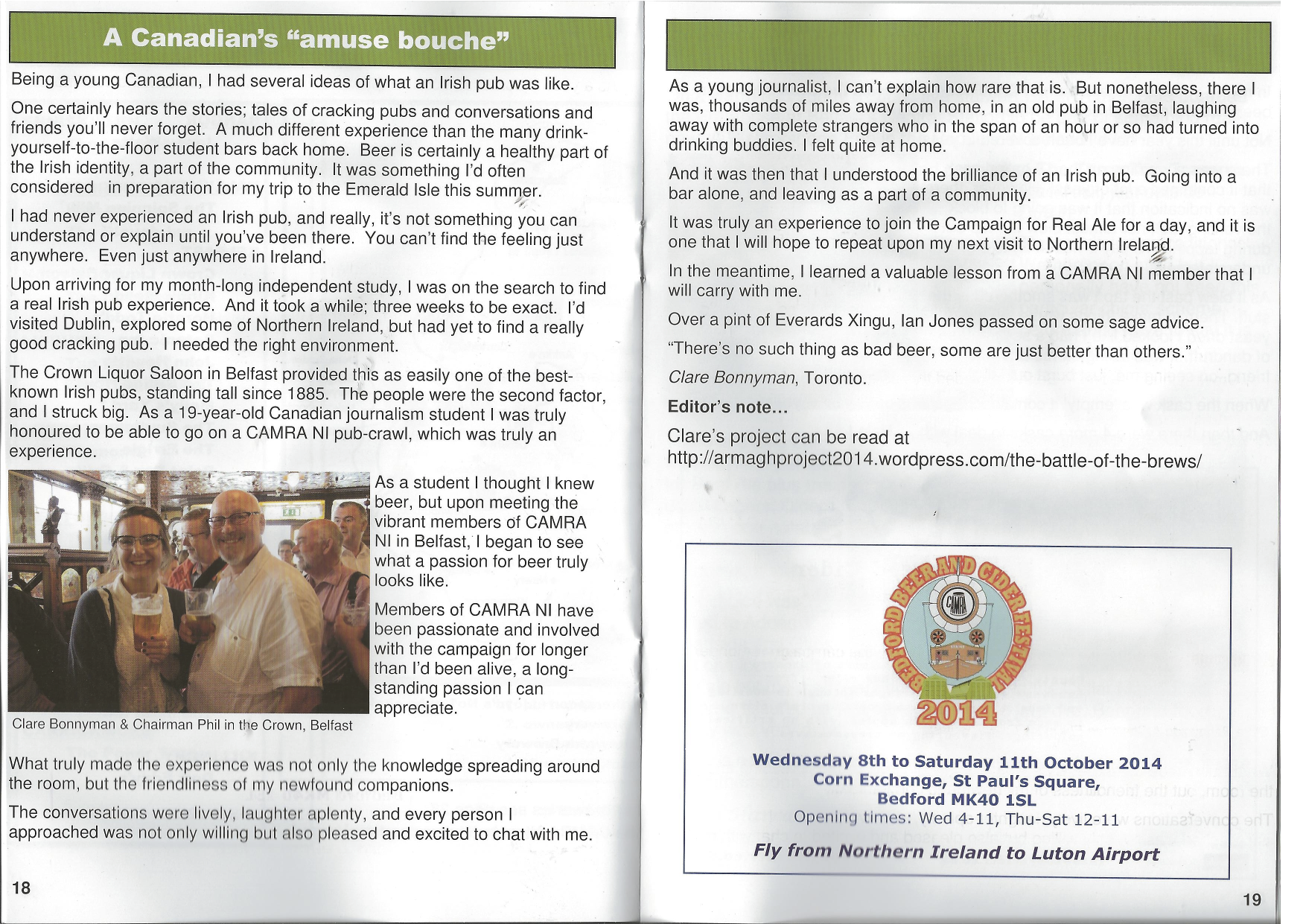
A Canadian’s “amuse bouche”: My piece in the Ulster Ale

Below is a scan of my article from The Ulster Ale, CAMRA NI’s branch magazine. CAMRA NI, otherwise known as ‘The Campaign for Real Ale in Northern Ireland’ is a unique group of real ale enthusiasts that graciously invited me along on one of their ‘Real Ale Pub Crawl’s in Belfast.

I had the pleasure of meeting Philip Hernberg, Chairman of CAMRA NI, and a number of CAMRA member’s while on this particular adventure.

It was truly a great experience, and certainly a unique way to immerse myself in classic Irish culture.

scan0001

The Simple Solution to Sexual Assault.

Anne-Marie Roy, president of the University of Ottawa’s Student Federation (SFUO), is sending out a clear message to students:

“Don’t rape”.

As post-secondary students head back to school, safety becomes a top priority. A growing concern regarding safety is the ‘epidemic of rape culture’ on campus.

Roy, a leader in the SFUO since 2013, has seen the school through multiple cases of sexual assault. Roy herself was a victim of sexual harassment last year, when a leaked Facebook message revealed sexual threats from male students.

In February of 2014 two University of Ottawa men’s hockey players were accused of sexually assaulting a young woman in Thunder Bay while away for a game. The two men are set to face charges in court, and the male hockey team is suspended for the 2014-2015 school year.

The controversial suspension is a serious move on the part of the university to stand against sexual violence, but “there is more work that needs to be done,” says Roy.

“University and college campuses are a reflection of what our society actually is. I think that the University of Ottawa, and all other universities, do need to show a bit more leadership in terms of tackling this issue,” she says.

A problem with the modern response to rape culture is the tendency to ‘victim-blame’; when services and programs to prevent sexual assault focus on arming potential victims with self-defense and preventative skills.

“We all know that, despite all of our efforts,” says Roy, “unfortunately it still happens.”

Roy wants to move forward with a message of responsibility and awareness, moving away from ‘victim-blaming’ towards “teaching what I think is a very good lesson – Don’t rape,” she says.

There is no one program or service in place to fight campus rape culture across Canada. But Roy stresses the importance of working with each community.

“I think that having a uniform approach in fighting rape culture is not effective,” she says. “The challenges that we see are not the same for students engaging in different activities across campus.”

For the SFUO this resulted in the formation of a task force against rape culture on campus, established in early 2014.

The aim is to ask, “what is the culture within particular spaces on campus, to come up with a tailored approach to tackle rape culture in each of these spaces” Roy explains.

In the meantime, her message to incoming and returning students about sexual violence is very simple.

“Just don’t do it,” she says.

An ode to freelance.

Some journalists give their lives to trying to share other people’s stories.

To give your life to try and change the lives of others, or even just document the changing face of the world, is a great price to pay.

James Foley is one of many freelance journalists who travel the world, heading straight for the action. They look for conflict, and delve into the heart of it to search for a deeper truth. They find the human nature within the most barbaric of situations, and share these stories of the world, reminding us that in war and peace we are all still the same.

Freelance journalists are brave, and courageous. They do something that most people could never do. While most people turn and run from war, freelance journalists are drawn to it and thrive in the middle of chaos. It’s an uncertain world, not knowing where the next major conflict will occur or whether or not your next article will get published. But there is always a need. The world wants to know what’s going on in the darkest of places, and freelance journalists are some of the only people that can enter these situations and share them with the world.

“Anybody who is in freelance work, especially artistically, knows that it comes with all the insecurity and the ups and downs. It’s a really frightening life.”- Alessandro Nivola

Two years ago James Foley went missing. The 40-year old freelance journalist fell of the map while on assignment in Syria, something that many who follow in his particular line of work face. Whether taken hostage, going into hiding, or just losing contact with the world, it’s not uncommon for freelance journalists to go M.I.A for an uncertain amount of time. The unfortunate truth is that reporting the missing status of war correspondents and other journalists in conflict zones isn’t common practice. The white noise could come as a result of a number of situations, and in hostage cases or other precarious situations reporting the event can make it more dangerous for the individual.

Today he is presumed dead after a video was posted by ISIS showing an individual being beheaded. Though unconfirmed, the world is mourning, and the event has gripped the media.

People don’t always consider journalism to be a dangerous career. Certainly there are kinds of journalism that are safer than most; sitting in a cozy radio recording booth, interviewing Hollywood’s whos-who, or working in a sleepy town on the coast. But when it comes to freelance journalism, travel journalism, being a war correspondent or working for an international bureau it’s pretty hard to compete with most other communications job danger-wise.

They say it’s for thrill-seekers, for adrenaline-junkies.

I think it’s for people that dare to tell the stories no one else can. In the words of his mother Diane; “He gave his life trying to expose the world to the suffering of the Syrian people.”

Foley’s death marks a significant reminder  for North Americans. A reminder that civilians can suffer at the hands of militants around the world, that you don’t have to work in the military to feel the repurcussions of an international-conflict. The conflict may be seperated from the rest of us by borders, but the suffering and impact is felt worldwide.

As for myself? I doubt I will ever have the strength to be a freelance journalist. To explore as they do, to seek out and find the stories in the midst of chaos is something that I don’t know if I could do. My first instinct is still to duck and run when fists or bullets start flying.

But I stand with other journalists in reflecting and remembering James Foley, and the sacrifice other freelance journalists and war correspondents have made for their craft. It’s an uncertain world. The only thing I’m truly certain of is the incredible strength of these individuals and the strength of their families and friends in hard times. I’m certain that freelance journalists will continue to face uncertainty and danger despite the loss of great writers like James Foley. They will continue to bring to us visions and glimpses of what we hope we never have to face at home.

But the struggle goes on.

From the Wall Street Journal:

“More than 30 reporters—about half of them Westerners—have disappeared in Syria and are believed to be held by extremist forces. Westerners working for aid groups also have gone missing in Syria. More than 50 journalists have been killed since Syria’s civil war began in early 2011, according to the Committee to Protect Journalists.”

#RIPJamesFoley

A Day in the Life of a Newsatarian.

An experiment in scheduling; I want to block out (mostly for myself) a day in the life of a Newsatarian/Journalism student. So much of my preperation for my journalism career comes from how I take in the news everyday, and how I digest it. Immersion in the culture is a must. To really look at how often I take in news and how I consume my news is to look at how I can increase my intake or improve the content I’m already taking in. Also, it might prove just how big of a NewsJunkie slash RadioJunkie I am. (Hint, HUGE).

So this summer, as I work as a marketing assistant in downtown Toronto, here’s how I’m engaging in the news even when I don’t have time to practice my reporting (or do anything else).

6:00 AM

My first alarm goes off. I reach over and struggle to turn off the alarm on my phone, while simultaneously turning on my CBC Radio One app. I tune it to whichever local CBC Radio stattion I’m nearest. During the school year it’s Ottawa Morning with Hallie Cotnam. When I’m back home, I’m all over Metro Morning with Matt Galloway. Now THAT is a solid voice to wake up to everyday.

6:10 AM

My second alarm goes off. In an attempt to actually wake up, I open up my phone and flip onto Twitter. I flip right to my News List and start scrolling through the headlines, seeing what’s up for the day, anything new, etcetera. At this point too I check my phone for CP (Canadian Press), CBC, Globe and Mail, National Post and Ottawa Citizen news updates that may have come through on my apps while I was asleep.

6:20 AM

I actually get out of this point… Usually.
I take my phone around the house with me as I get ready, listening to the news updates as they come in, and listening to people who are far more awake than I am. I like to think of it as inspiration.

7:00 AM

I leave the house to catch a train, and say goodbye to my wifi. At this point theSkimm has arrived in my inbox on my phone. Probably one of my favourite sources of news at any time of day (but especially the morning), they summarize news and conflicts in a way that is understandable, fresh, often tongue-in-cheek and just in general awesome. This also gives me -as a Canadian- a great rundown on U.S. politics and U.S. National news in a way that I can actually wrap my head around. I read this on the train on my way downtown, which usually takes about 45 minutes.

8:00 AM

At this point I’m usually in the office if not far off. Back with internet (PRAISE) I log on, check my email and set up my screen for the day; newsmap in one tab, CBC Radio One open in another, and everything else I need for work.

THROUGHOUT THE DAY AT WORK.

I tune in and out of the Radio, trying to catch as much of shows like The Current with Anna Maria Tremonti or Q with Jian Ghomeshi. As a hopeful radio producer/journalist I try to soak up as much of CBC Radio as I can. The national news service offers a wide vareity of programming that covers so many topics, and each show is produced in a unique way. If you like marketing/business or just want to hear something really cool, I highly recommend Under the Influence with Terry O’Reilly. Like technology? Spark with Nora Young features some incredible stories about science and technology. White Coat Black Art with Dr. Brian Goldman is great for the health conscious etcetera, etcetera. I highly recommend looking into CBC Radio programming, you won’t regret it.

I get daily updates on my phone from different apps and keep myself up to date on events as they unfold. Through my job and my company’s twitter account, I get  a great insight into Canadian News and Canadian Military News, particularly news releases from the Department of National Defense and the Canadian Armed Forces.

Facebook gives me plenty of updates on news as well. For lighter fare I’m a fan of Refinery29, a unique lifestyle and fashion website that I have fallen in love with. They post a ‘Things you Need to Know This Morning’ everyday which is a great roundup for a collection of news. On any given day you’ll find entertainment stories, international news events, business and commerce news, and some celebrity gossip to boot (the Snickers bar of the Newsatarian diet).

5:00 PM

By this time, I’m usually on the train home, or at least headed to it. If I haven’t used up my data for the month I flip through the news on twitter, but more often than not I just zone out and sleep. No shame.

6:00 PM

Back at home, radio is back on, and I’ll generally settle in to do some work, edit some writing, scope for scoops etcetera. I’ll generally tune into the TV news if I’m at home and have cable. Generally CBC or CTV fits the bill.

A couple of times a week I listen to a Radiolab podcast in the evening, by far one of my favourite radio shows and experiments to come out of the U.S. (which I have to admit, is far more experimental and diverse than Canadian radio). It’s a great show to listen to, to really experience what incredible radio production can do. Radio becomes a visual art if used the right way, and Radiolab uses editing and tools to the fullest.

Again, back on twitter, news, etcetera until I fall asleep. Luckily, even if I’m doing something else, breaking news will pop right up on the front of my phone and I can quickly tune in to the latest developing stories as soon as they happen. Timeliness is everything in the modern journalism and communications world, so as a student I’m working to acclimate myself to news around the clock.

And that’s a very general -and rough- day in the life of a Newsatarian slash Radio Junkie.

Now if you’ll excuse me, I have some work to do.

The Battle of the Brews

By Clare E. Bonnyman

** This is a long-form journalism feature that I completed as a part of my multimedia collection produced for the Armagh Project 2014 and ieiMedia. I studied in Northern Ireland for a month and produced audio, visual and print work about the craft beer revolution and the rise of microbreweries.

LISBURN, Northern Ireland – It’s the most beautiful day Northern Ireland has seen in months, but Lisa Maltman has no time for that.

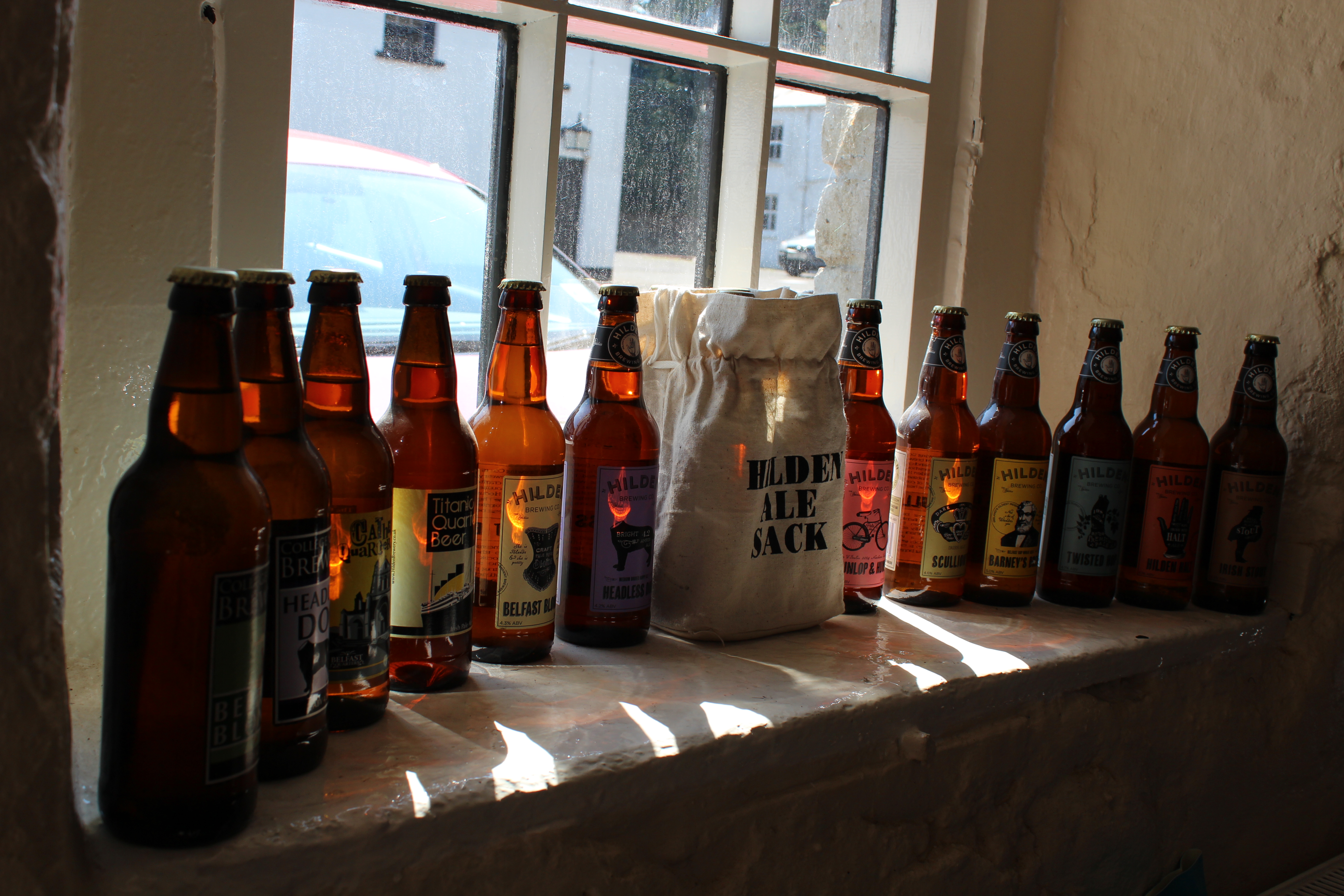
She is in charge of global sales and marketing for the Hilden Brewing Company, Ireland’s oldest independent brewery, established in 1981.

Being a small brewery in Northern Ireland is a struggle, with a large percentage of the market controlled by multi-national companies like Diageo and InBev – which run Guinness and Stella Artois, respectively.

Maltman’s office, much like the rest of Hilden Brewing, is a constant flurry of activity to keep the company’s product on the market and in the game. Her desk is covered in Post-it notes, graphs, business cards and bottles. In the midst of a craft-beer revolution in Northern Ireland, Hilden is using every opportunity to grow.Hilden Brewery, Lisburn

“We brew every day, and we are at peak capacity at the minute,” says Maltman.

“I’ve just remembered about seven different things I have to do,” she says, typing away furiously.

***

In recent years craft beer production and microbreweries have taken off internationally. Government-licensed alcohol vendors and bars across the world are serving more and more microbrews and craft beers, usually locally sourced.

In North America in particular, the craft beer market has boomed. In 2012 in Canada craft beer sales grew by over 30 percent, in contrast to relatively flat sales of wines and spirits.

This of course pales in comparison to the growth of microbreweries in England, where the microbrewery movement began in the 1970s. That was when a new generation of small, focused breweries started to produce cask-conditioned beer, also called “real ale.” From 2002 to 2012 the number of microbreweries in England doubled, making one brewery for every 50 pubs. There are well over 1,000 microbreweries in England today, and the number is growing by hundreds each year across the U.K. mainland.

But as of the summer of 2014, only 14 microbreweries are active in Northern Ireland. There are a number of reasons why.

Being in the U.K., it’s not hard for Northern Ireland to import a variety of microbrews to add some craft-style diversity. There are also very few bottling plants in Northern Ireland to service new microbreweries. This of course doesn’t even go into the politics that make it difficult to start a brewery in Northern Ireland.

The modern craft beer revolution has reached a crucial point for Northern Ireland, as more microbreweries pop up and fight to survive.

Continue reading “The Battle of the Brews”

BBC News and Biased Views in Belfast.

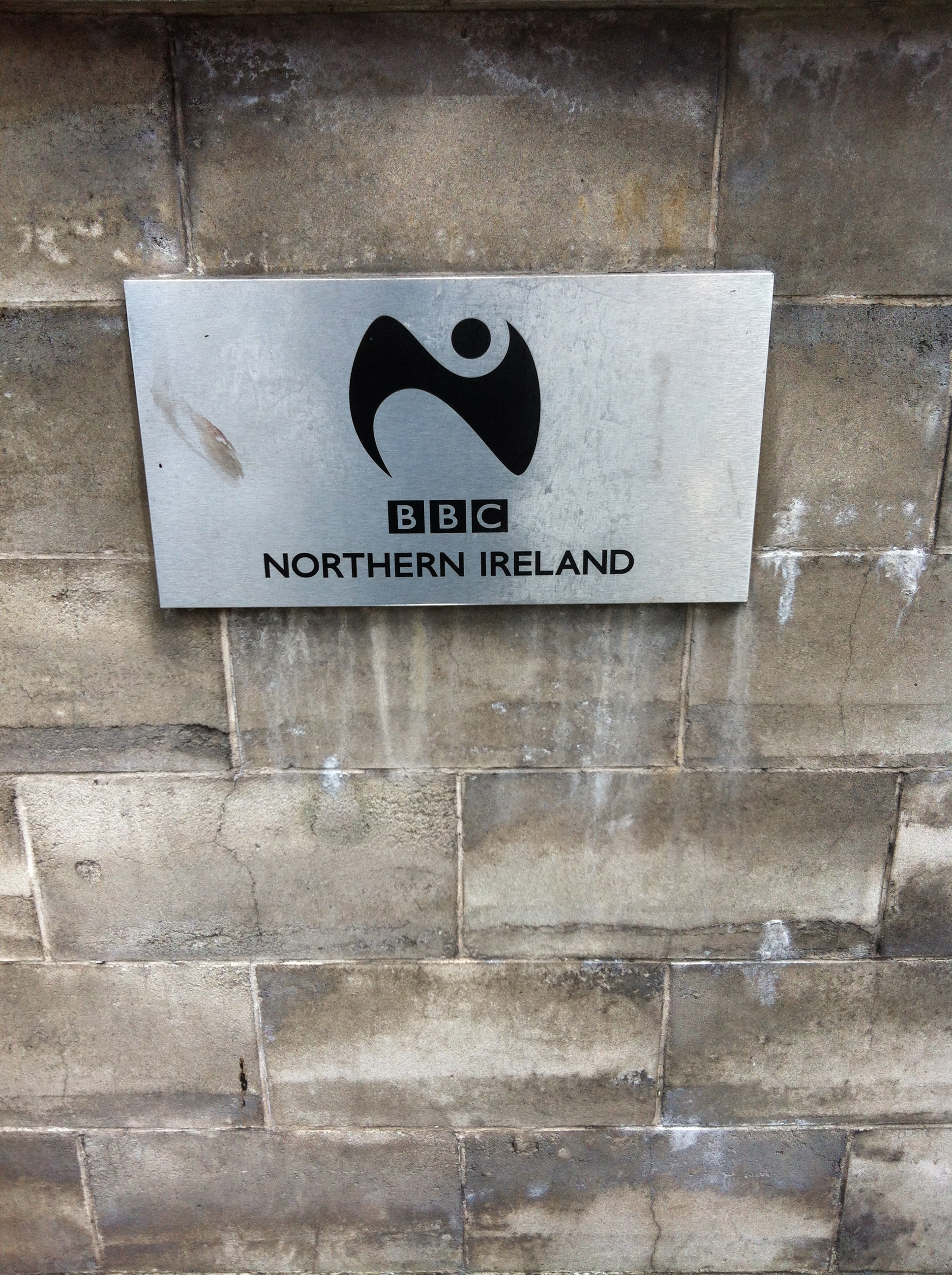
In Belfast one of the more memorable experiences I had was visiting the BBC Northern Ireland headquarters and visiting with Claire SavageMark Devenport and Martina Purdy.

It is always an incredible opportunity to be able to learn about the journalism industry from individuals who have worked first hand in it, but I found it fascinating to learn about the news system in Northern Ireland, and how it differs from the rest of the world.

In a country where religion transcends almost everything, and one’s faith influences political ideologies, moral beliefs, historical understandings and more, it is only natural that the same ideological separation exists in how one consumes the news.

Claire was telling us how she published a ‘neutral’ newspaper at one point during her career. The attempt was to create a single news source that everyone in Northern Ireland could read, regardless of religion or ideological/political beliefs. While staying away from religion and politics, it would serve the community as a whole.

When she first mentioned it I must admit that the idea struck me as ingenious. In a world where religion is seeming to have less of a visible influence over youth and the general population, it only seemed natural that the transition to a ‘neutral’ news source would come in time as it has seemed to in other countries.

In Canada, no blatantly religious newspapers are widely distributed. Apart from the Anglican Journal or other church-published newsletters there is little religious bias or focus in the journalism industry. Political bias absolutely, but that is held apart (mostly) from religion.

In Northern Ireland the political climate is unique. The religious beliefs of the Catholics and Protestants are tightly bound to the beliefs of the Nationalists and Unionists, respectively. And so where in North America we have clearly Conservative or Liberal newspapers (Republican or Democrat in the United States), Northern Ireland has Catholic or Protestant.

(For more information here is BBC UK’s ‘Brief History of the Troubles, to explain the divide).

Claire’s newspaper unfortunately didn’t make it past six weeks, which only stands to demonstrate the work that is still to be done in Northern Ireland, but also shows the current climate in the international journalism scene as well. Print is going out of style, and it is becoming harder and harder for new print publications to exist. The web is taking over, and only those pre-established newspapers are finding any readership; and even that is declining.

As printed newspapers are “phasing out” it will be interesting to see how these biases and ideologies choose to present, produce, and distribute their news, whether it be to continue printing the papers, or to amalgamate into one large journalism mass, or maintain their bias in an online presence. As the climate in Northern Ireland shifts towards a more unified people it will also be interesting to see the influence on the NI journalism business. Will these biased papers drop off the earth, or will the religious and political knots eventually untangle themselves and settle into their respective corners?

Certain Belfastians are optimistic about this separation of church, state and community as a whole. A gentlemen named Tom, who led me and my peers on an incredible Black Taxi tour around the city over the weekend, believes that the young people of Belfast are setting the stage for a new era of history. By putting aside religious segregation and biases, he believes the Peace Walls will be down by 2023, and a new Belfast will be ushered in led by a non-partisan youth.

As for me, I certainly hope he’s right, and that newspapers like Claire’s can exist and thrive in a bright community that reflects on it’s past while still marching forward.

IMG_6937

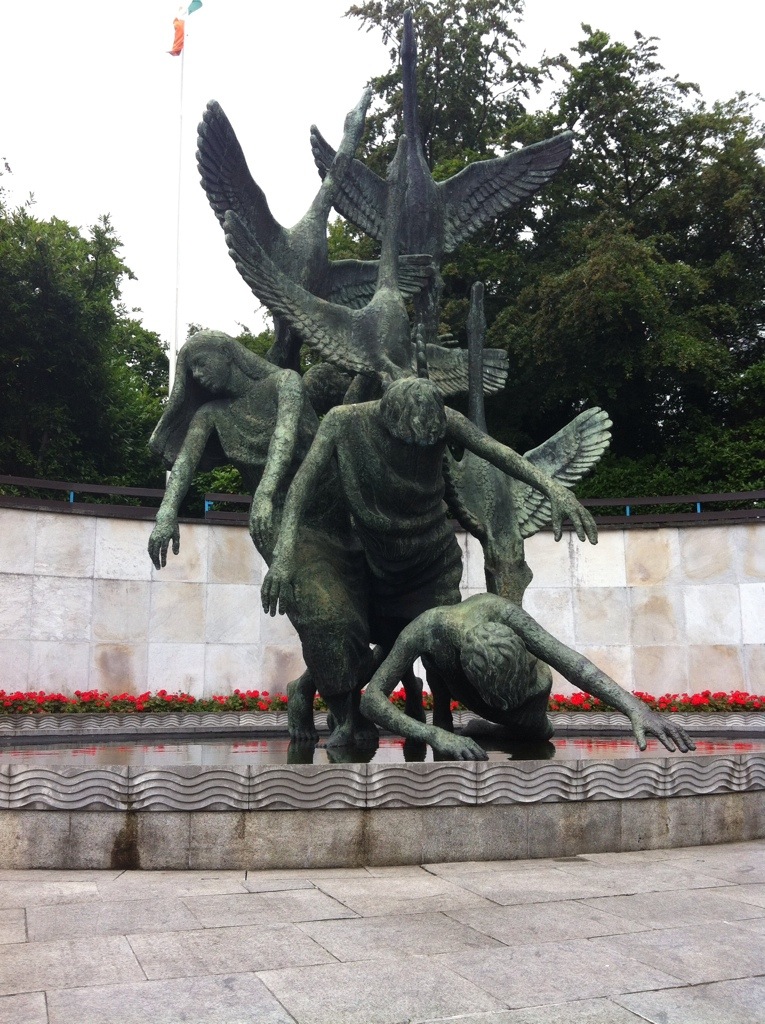
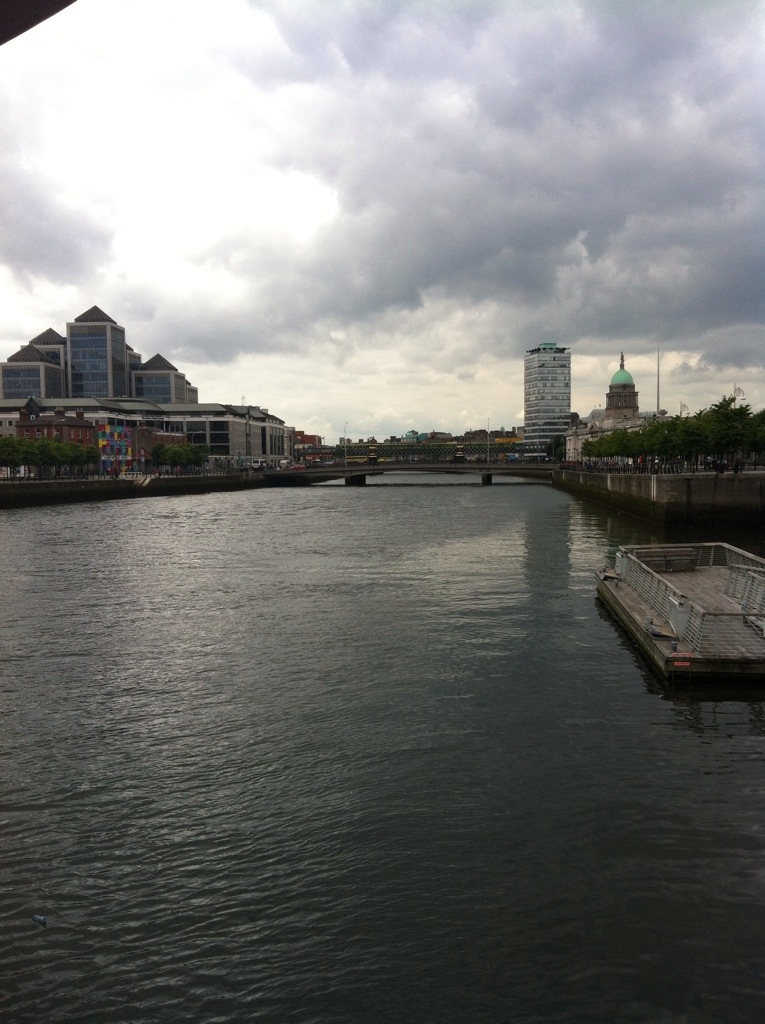
Dublin, Dublin, Dublin.

It is such a beautiful city.
There’s something about river cities and coastal cities that I find irresistible. I like the water and breeze, I think. And although it’s much busier than the quiet cathedral city of Armagh, it still has this incredibly visible identity.
One of the more remarkable adventures I’ve had while in the city was my tour of the Guinness Storehouse.
Did you know that Arthur Guinness originally signed a 9,000 year lease for the St. James’ Gate property? Now THAT is some serious confidence.
This is the same property where the storehouse still stands, boasting the worlds largest pint-shaped structure. Beyond the architecture and my new title as a ‘Professional Guinness Taster’ -here’s a tip, stand up straighter- I’m amazed at the history and pride that goes into making every pint. Every sign mentions it’s founder Arthur Guinness as the fifth ingredient, and his identity as an Irishman and Guinness’ identity as ‘The Irish Beer’ is evident and proudly displayed.
Nationality is so tightly entwined with everything in this city, and that does make me very happy. It’s beautiful to see a city embrace it’s culture and nationality with such vigor.
It’s also interesting to note the contrast of old and new. The modern way ‘Dubliners’ and the Irish are reclaiming their identity mixes with the city’s old buildings, sights and museums is a testament to cultural evolution. Out of conflict and confusion, Dublin has shifted into a modern city with a heck of a story to tell.
I’m left wanting more from Dublin. I’ve experienced some of the brilliant things this city has to offer, but I so look forward to experiencing more.

20140714-212852-77332661.jpg

20140714-212846-77326380.jpg

20140714-212844-77324402.jpg

20140714-212848-77328280.jpg

20140714-212843-77323019.jpg

20140714-212850-77330827.jpg

#HBDDublin

Well, we have officially spent a day in Dublin and I am in love.
It is such a busy, bustling, winding city that it never seems to sit still, and yet it has this incredible and rich history behind it. A few stolen moments in the garden of Dublin Castle, in Sweny’s Chemist (an establishment untouched since the 1920’s that now deals in readings of James Joyce’s work), Trinity College and the Abbey Theatre helped to reaffirm the incredible offerings of this city.
Much different than the quiet Northern city of Armagh, Dublin’s history is unique and the POV is just as independent. The people of the Republic of Ireland are very much Irishmen, and refuse to be referred to as anything else. The identity is that much different, and at the same time just as complicated as that of NI.
I look forward to seeing more of what this thousand-and-something year old city has in store for me over the next couple of days.

20140711-211955-76795818.jpg

20140711-211953-76793061.jpg

20140711-211948-76788251.jpg

20140711-211949-76789628.jpg

20140711-211951-76791469.jpg

20140711-211946-76786899.jpg